 Blogcritics The critical lens on today's culture & entertainment
Japanese writer-director Neo Sora’s narrative feature film debut Happyend, now screening at the 62nd New York Film Festival, is poignantly and originally realized in its sly social commentary about current global anxieties, for example, the increasing slip sliding into governmental authoritarianism in Japan, viewed through the perspective of high school students in their graduation year. With a plausible sci-fi twist that sets the time in the not too distant future in a Tokyo high school, fear is used to control the population and enforce a more gradually oppressive culture which is akin to the frog immersed in water, slowly set to boil and, too late, realizing it must escape.
Before the film begins, we read a quote about the traditional enforcers of crumbling systems. They grow weary in the near future, ushering in a time of change. That change is initiated by youthful rebellion.
Amid an oppressive, classist education system, and safety protocols where the populace receives daily frightening earthquake alerts on their phones (at the outset false alarms), we meet childhood friends Kou (Yukito Hidaka) and Yuta (Hayato Kurihara). As the film unspools these BFFs negotiate the pressures of their lives by playing music as talented DJs. They are inseparable from three other like-minded friends, Tomu (Arazi), Ming (Shina Peng) and Ata-chan (Yuta Hayashi). Mischievous, fun-loving, enjoying the autonomy afforded them as seniors on the brink of adulthood, they stand distinctively above the crowd. Thankful for small pleasures, they delight in the freedom offered by the school’s music room, which they use as their base of operations.
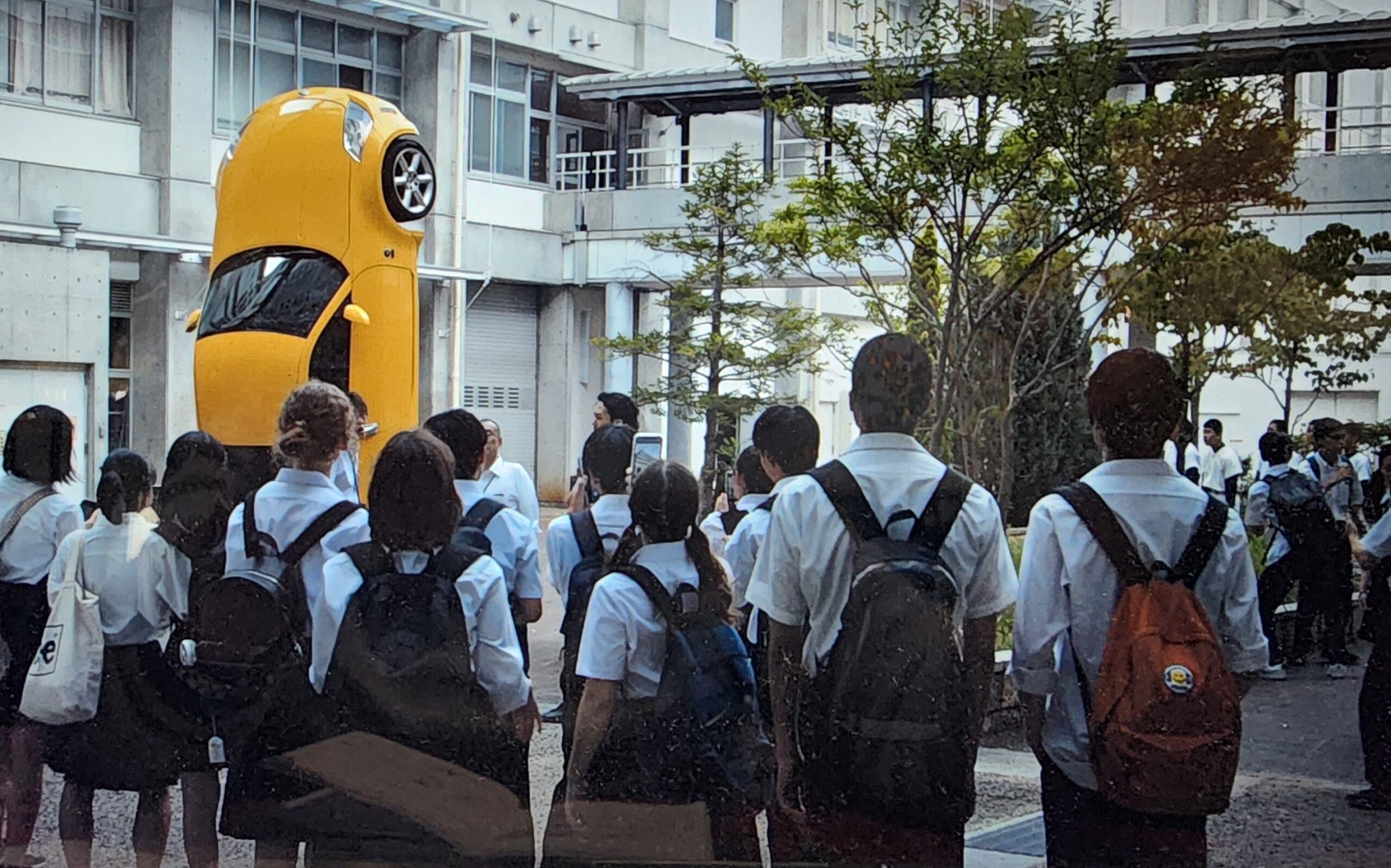
Sneaking into an unlicensed techno party which cops raid, and barely escaping, Kou, Yuta and the group head back to school, humorously redirecting the security guard with a meowing phone app to gain entrance to their “Music Research Club,” where they pump out their own music and dance. Taking a break on the roof to enjoy a cigarette, Yuta and Kou note the new, yellow sports car of the arrogant, biased principal (Shiro Sano), gleaming in the parking lot. It is the principal’s pride and joy. Cleverly, they manage to turn the small car end up. Shocked to see his car so ridiculed, the humiliated principal decides to avenge his wounded, foolish ego by calling in the police instead of handling it in-house.
Seeing the prank and the principal’s response as reflecting the culture’s repression, student activist Fumi (Kilala Inori) mutters to her classmates about “bureaucrats with weapons” which only “serve to protect the country’s wealth.” She has opened the door to Kou’s heart with her intellectual defense. He, more than Yuta and the rest of the notorious crew, is the main suspect because of bias: He’s from a Korean family, an outsider trying to integrate and advance himself to a good college. Meanwhile, the principal, who rebrands the mischievous act as “terrorism,” threatens to withhold Kou’s college recommendation unless he tells the truth and confesses. A confession will destroy his chances of a scholarship, so he keeps silent, and close friend Yuta is the last person to betray them both.
Kou and Yuta have outsmarted the principal, which infuriates him even more, especially since there is no proof or confession to hold anyone accountable. With no proof, the principal increases the disciplinary measures school-wide.
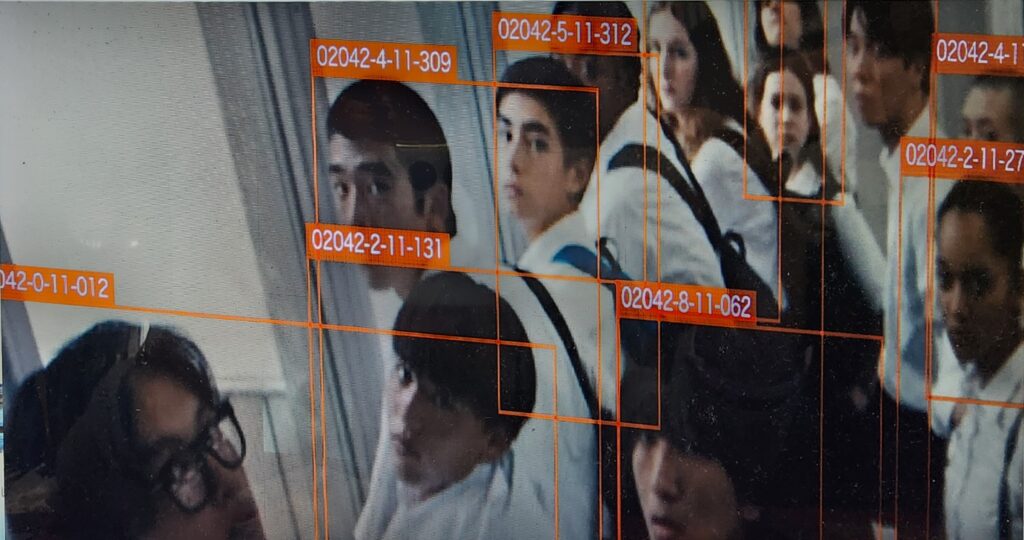
Through a draconian security system with facial recognition technology cameras anchored throughout the school, students’ rights are curtailed. The security team identifies wayward students and gives them demerit points for each infraction. Initially, Ata-chan, as a joke, flips the bird at the camera, which his classmates reward with a round of applause, though he is punished with demerits.
More actions are taken by the principal to suppress the students’ voices and freedoms in an autocratic spiral of control. Because their homeroom teacher supported them, he is replaced by an inflexible, humorous individual who aligns with the principal’s strictures. “The Music Research Club”‘s room is declared a fire hazard, and the principal has the electronic equipment locked away in a storeroom.
When a real earthquake hits, the prime minister establishes an emergency decree which claims that natural disasters increase crime rates. Police actions intensify. Fumi encourages Kou to join her at street protests and the students sit in, protesting the principal. Kou broadens his perspective and seeks her company rather than that of his friends.
Because of the feedback loop of paranoia, fear, and protest, neighborhood watch groups patrol the streets at night and the effect is a less peaceful, secure environment where people don’t feel safe. With the culture beginning to fracture, Kou upbraids Yuta for his silly mischief and “devil-may-care attitude,” and Yuta is devastated by his friend’s decision to spend more time with Fumi. In addition, as the group prepares for graduation, biracial Tomu says he’ll be going to college in America.
Yuta is losing two friends to time’s circumstances, another devastation. With signature cinematography, silences and beautiful haunting music, the director elicits the audience’s empathy for Yuta in a remembrance of the enjoyment of youth coming to a close as the responsibilities of adulthood take over. With great skill and sensitivity, Sora strengthens the poignancy of what subtly shifts to a powerful and nuanced coming of age story in addition to a socioeconomic/political commentary about forms of oppression which ultimately cave in on the culture, an opposite effect than what is intended.
Sora creates a smashing, gently profound film. It confronts us today about our political fears and seeming powerlessness in the face of looming environmental disasters. He magnifies the dissonance we feel in negotiating the world and culture as we perceive its demands upon us. Above all, Happyend reminds us that love, faith and friendship in the face of our fears and powerlessness are paramount. The conclusion at the graduation ceremony and after is emotionally wrenching, surprising and unforgettable.
Happyend is screening at NYFF 62. Look for the film on streaming platforms in October.