 Blogcritics The critical lens on today's culture & entertainment
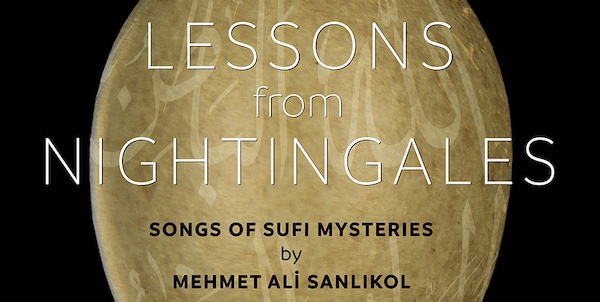
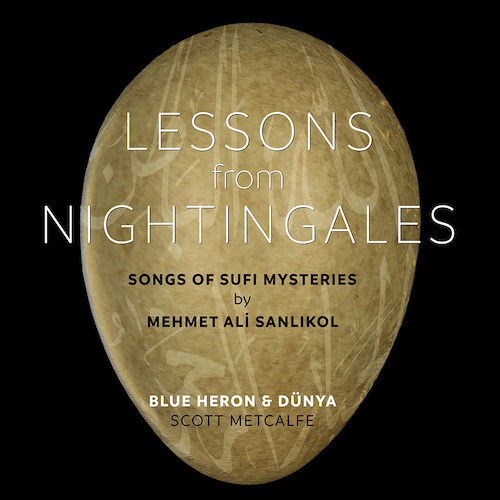
Talk about multiculturalism. Lessons from Nightingales offers the premiere recordings of new music inspired by Turkish Sufi mysticism. It reflects the background of Turkish-American composer/instrumentalist Mehmet Ali Sanlıkol, the director of Berklee College of Music’s Intercultural Institute. But also in the mix are Renaissance polyphony and counterpoint, Japanese gagaku (which uses the simple pentatonic scale), and Middle Eastern makam (built on vastly more complex microtonal modes). The resulting collaboration between Sanlıkol’s instrumental group DÜNYA and Boston vocal ensemble Blue Heron is as beautiful as it is tricky to describe.
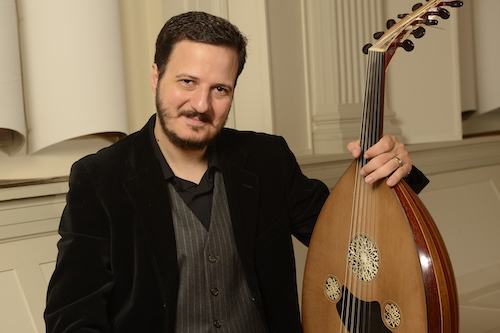
Comprising the bulk of the album, The Triumph is a five-movement setting of a poem by Edip Harabi, the Bektaşi Sufi dervish. Conducted by Blue Heron’s artistic director Scott Metcalfe, it features the singers of Blue Heron and the DÜNYA instrumentalists. Their instruments include the ney, a Middle Eastern end-blown flute; the yayli (bowed) tanbur, a 20th-century evolution of the Middle Eastern tanbur (long-necked lute), played by the composer; and percussion.

The first movement, “Kanat – The Universe,” introduces the suite’s sounds and some of its modes – essentially what we’ll be hearing throughout. After an instrumental introduction, swells of choral harmonies come and go, exotic-sounding and at moments dissonant. A chorale ends the piece in modes faintly suggestive of Eastern Orthodox sacred music, while a soprano soloist finishes out the lyrics.
The next movement proceeds with chant-like vocals. The choir divides into multiple voices that produce stunning harmonies and a striking, ultimately explosive sound. The third piece progresses through a series of vocal passages replete with melody and chant but also densely polyphonic. The effect is darkly eloquent and emotionally arresting regardless of whether you have any clue as to the meaning of the words.
The fourth movement is a mesmerizing dance-like piece with sinuous choral lines. The ethereal finale, “The Triumph,” starts softly and a cappella. Only halfway through do the instruments enter. A voice imitates a bell ringing; then a real bell-like percussion instrument begins a repeated three-note gong-like motive over which sails a gorgeous ney solo. The choir’s polyphony intensifies, then fades to silence.
And that’s not the end. The ney joins the tanbur in a restful theme followed by a kind of choral mini-fugue. That’s what builds to an expansive and decisive finish, as, underneath, a drum beats a pattern that you can also hear today, faster, underlying some current Turkish pop music.
The album also includes Devran, for a cappella choir, in which Sanlıkol sets texts by Mevlevi Sufi dervishes. Its two movements won’t sound entirely alien either to listeners of Renaissance motets or of contemporary choral music. But they will sound distinctly original. They combine Western imitative elements with, again, Middle Eastern and Turkish Sufi music. They show how the composer can also work his multicultural magic without using instruments from non-Western traditions.
The first movement opens with a phrase of solo plainchant, creating an expectation of a Renaissance form. But development takes place over a repeated monotone figure that moves us far from European sacred music. A recapitulation of the opening launches a richly harmonized section that peaks with a note from a soprano that feels like it’s from the wrong scale. We’re in seemingly uncharted waters. The monotone motive returns to support haunting counterpoint with, again, an unexpected note or two. A broadened version of the opening theme acts as a coda.
The second movement begins with a canon, then opens into a quest to find harmony in a context of foreign-sounding modes. The passionate music illustrates the poem’s imagery, which depicts visions such as “angels around the Throne…in a frenzy with Hu (God)” as “the heavens never stop turning.”
I found Lessons from Nightingales as gripping as anything I’ve heard in a long time. Multicultural, sure, but nothing here feels studied, didactic, or intentionally woven-together or contrasted. It’s a coat of many colors with no clashing hues. It repays a close listen giving an ear to all its influences and how all its parts work together. But the music also casts an exotically original spell, The Triumph especially. I haven’t heard anything quite like it before.
Lessons from Nightingales is available now on digital or CD.