 Blogcritics The critical lens on today's culture & entertainment
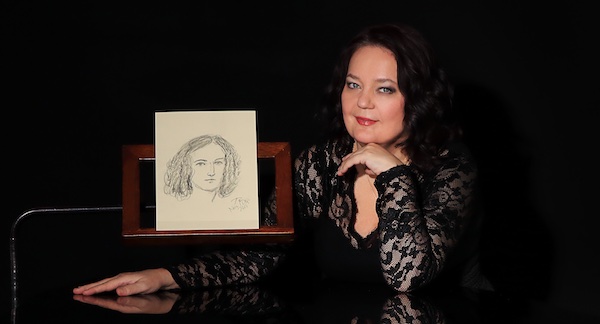
Pianist Ana-Marija Markovina has already recorded all the solo piano music of Felix Mendelssohn and of C.P.E. Bach. Now she’s undertaken the same feat for Fanny Mendelssohn Hensel, sister of Felix Mendelssohn. But there’s a big difference: In this case, about half of the pieces are world premiere recordings. Hänssler Classic has released Volume 1 of the collection. Volume 2 will appear later.

Recording Fanny’s 160 or so piano works is special to Markovina in a particular way: “Fanny’s universe moves me time and again to a state of reverential awe,” the pianist says. “Her personal biography contains quite a considerable portion of tragedy precisely because it is not a story of legendary artistic potential but an example of the strictures of the era in which she lived.”
That’s a perceptive observation. Fanny Hensel had more than “artistic potential”; she composed some 450 works. And it isn’t enough to say that her music is as skillfully composed as that of her male peers. Like theirs, it has a distinctive voice (or voices). Having listened to over four hours of Fanny Hensel’s piano music, I’ve begun to associate certain elements as characteristic of her style. For example, I could point to the adventurous harmonic development in the strange Westöstlicher Redaktionswalzer, H 184. In other works one can detect recurring ways she has of varying voicings. There is at times a characteristic shade of playfulness too.
As Markovina notes in her liner notes, Fanny’s writing “did not need to find favour with anyone, or meet others’ expectations.” Her “musical language [was] harmonically audacious, innovative, bold and personal.” The pianist does hear elements of other composers, like Beethoven and Fanny’s brother Felix. But having worked through Hensel’s entire piano oeuvre, Markovina comes to “believe [Hensel] was in fact her brother’s inspiration and not vice versa.”
That’s a bold statement. But I find that a close listen to Fanny’s music while bearing Felix’s in mind lends the claim plausibility.
Beginnings
Passion, subtlety, deep study, and tastefulness, if not yet much originality, all emerge early on: in the spidery left-hand accompaniment of the Klavierstück H 29; in the Schubertian intensity of the middle section of H 30 (a piece Markovina adorns with almost-theatrical rubatos); in the agile, baroque-inspired H 37. H 39 bears a lilt that resembles something Felix might have conceived. She evidently loved giving her left hand challenges equal to those of her right.
The first piece of greater length and substance, the Sonatensatz (Sonata Movement) H 44, speaks of deeper things. From here on, the music takes on more dimensions. Most of the rest of Disc 1 consists of exercises (Übungsstücke) whose didactic purposes (and intentional difficulty) are obvious but which also show the great seriousness of purpose of a musician fully intending to develop her talents and skills to the utmost. Correspondingly, you can hear Markovina having fun with these workouts. And some, like H 74, and H 88, have beauty and finesse independent of technique.
Inside the Mind of a Composer
The all-minor-key (!) Disc 2 starts out with a sensitively played and warmly Schubertian “Sonata o Capriccio” H 113. The Tokkate H 114 proves curiously modern-sounding while also faintly resembling the popular C.P.E. Bach “Solfeggietto” (which itself has been called a toccata).
Lisetning to highly accomplished music that one has never heard before, like the more ambitious Sonata in C minor H 128 with its ferocious “Presto” finale, can give you a sense of a composer’s mental gears working as they realize an original vision within a familiar form and style. Once you’ve heard Mozart and Beethoven (and Felix Mendelssohn) enough times, one starts to take their genius for granted and view the work as brought down fully formed from a mountaintop. Markovina, instead, brings us music from the height of the classical period created by one if its most advanced minds and gives us a rare view into such a mind.

Disc 2 is crowded with impressive showpieces, like that finale to the C minor sonata, and the Klavierstück H 139, where Hensel puts to work the skills developed (presumably) through her own scintillating exercises. The disc ends with two “Andante” miniatures of visionary tenderness.
The Romantic
Early on Disc 3, unexpected progressions abound in the spidery Fugue H 193. It’s followed by captivating performances of two short, dreamily contemplative pieces that show an increasing bent toward emotional complexity; the last part of H 202 hits a totally unexpected romantic high. There’s great density and an intense seriousness to the six pieces of the Klavierbuch H 214, including a weighty fugue and a bloodcurdling toccata.
By contrast, positive feelings suffuse much of the four-movement H 235 Ostersonate. On a background listen, I had the illusion that the beguiling Allegretto-Scherzo was something by Chopin. Markovina is at her most fiery on the magnificent “Allegro con Strepito” finale, a tapestry of high drama with a beautiful, calming closing section and coda.
A close listen to the H 302 Klavierstück from Disc 4 gave me that Chopin vibe too, more consciously. It also provides a good example of Markovina’s enthusiasm; at times her phrasing nearly tumbles over itself.
Songs for Two Hands
That fourth and (for now) final disc begins with a “Duett für Tenor und Sopran,” marked as “to be sung with the fingers.” It’s a beautiful piece and a great example of the composer’s beyond-the-usual thinking. Fanny composed a number of accompanied duets for singers; here she transposed the idea to the two hands of the piano.
A complete turnaround in mood then follows with a ringing performance of the patently Bach-inspired Fugue in E flat major. Next up, and spinning out yet another color, are the impassioned H 294, H 302 and H 304 Klavierstücke. These pieces confirm that by this stage, Hensel’s combined musical-emotional spirit had fully flowered. Markovina plays them with appropriately Horowitz-ian fire.
Indeed a close, straight-through listen to Disc 4’s hour-and-a-quarter of music becomes almost overwhelming.
A furious engagement with melody stands out in Hensel’s piano music of this period. Listen for example to the grandiloquent H 332 Klavierstück. These melodies betray a talent and priority she shared with her brother.
A smoky nocturne provides a break from the heavy passion surging through Disc 4, which ends with three lieder, including one of Hensel’s more well-known works, the “Lied (Lenau), Larghetto.”
Fanny Mendelssohn Hensel in Context
One wonders what brother Felix must have thought upon hearing some of his sister’s most accomplished compositions. History tells us he was as dismissive of the idea of a woman composer in the public sphere as their parents’ generation had been. And his career took him away from his family a lot. But he must have known at least some of Fanny’s best music, and, as Markovina intuits, it’s hard to imagine him failing to appreciate its brilliance.
It’s also interesting to imagine ourselves as friends and family hearing her play these powerful works at house concerts. What kind of impression did they make? Did people consider the respect and attention the music would have garnered from the wider audience that Fanny Hensel wasn’t privy to? Or did they all just sit back in their armchairs and accept the sexist zeitgeist without question?
More to Come
We await the second half of Markavina’s compendium. In the meantime we have a tremendous trove of great music to enjoy and appreciate in this first volume.
Scores for Hensel’s piano music and much of her other work are now available for free online thanks to the HenselPushers website. HenselPushers also provides interesting notes, like this one on the early piano exercise H 69: “This piece seems to be Fanny’s response to a fraught conversation between her mother Lea and fiancé Wilhelm [Hensel] about Wilhelm’s interest in converting to Catholicism, which threatened their engagement.” Fortunately it all worked out, and Wilhelm became Fanny’s biggest supporter.
Now we also have Ana-Marija Markovina giving us the complete piano works, many recorded for the first time. Her project will surely broaden Fanny Hensel’s reputation more than ever for a new generation of listeners and musicians.
The Hänssler Classic digital release is out now. A CD box set is available now in Europe and will be available in North America on June 19, 2026.