 Blogcritics The critical lens on today's culture & entertainment

Drinks and Spirits in a Remote Irish Pub
The significance of Conor McPherson’s The Weir, currently in its fourth revival at Irish Repertory Theatre, has evolved for our time. The drama with comedic elements captures the bygone Irish pub culture and isolated countryside, which have been mostly disappeared by hand-held devices, social media, and a global economy. Directed with precision and fine pacing by Ciarán O’Reilly, The Weir completes the Irish Rep’s summer season, closing August 31.
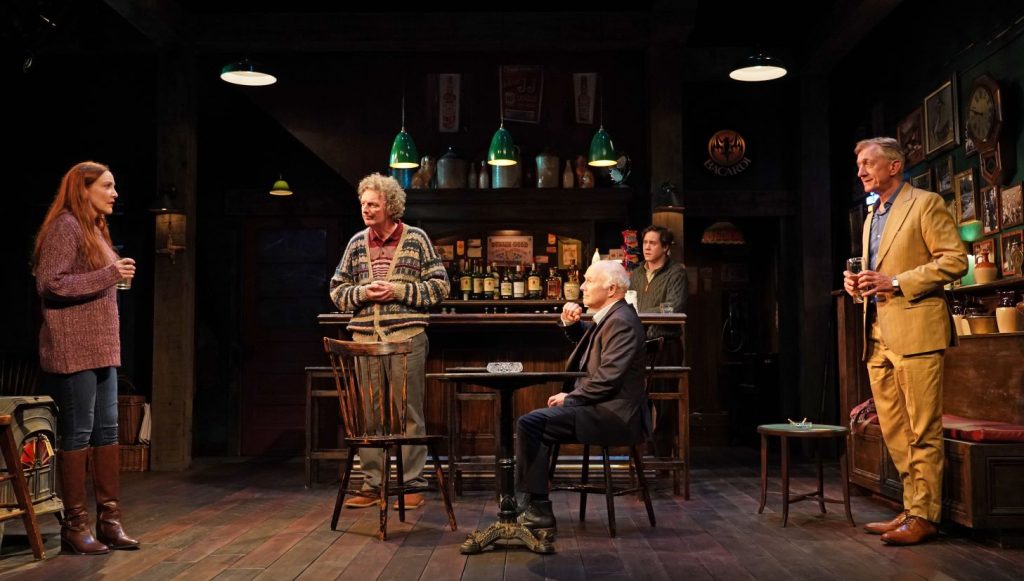
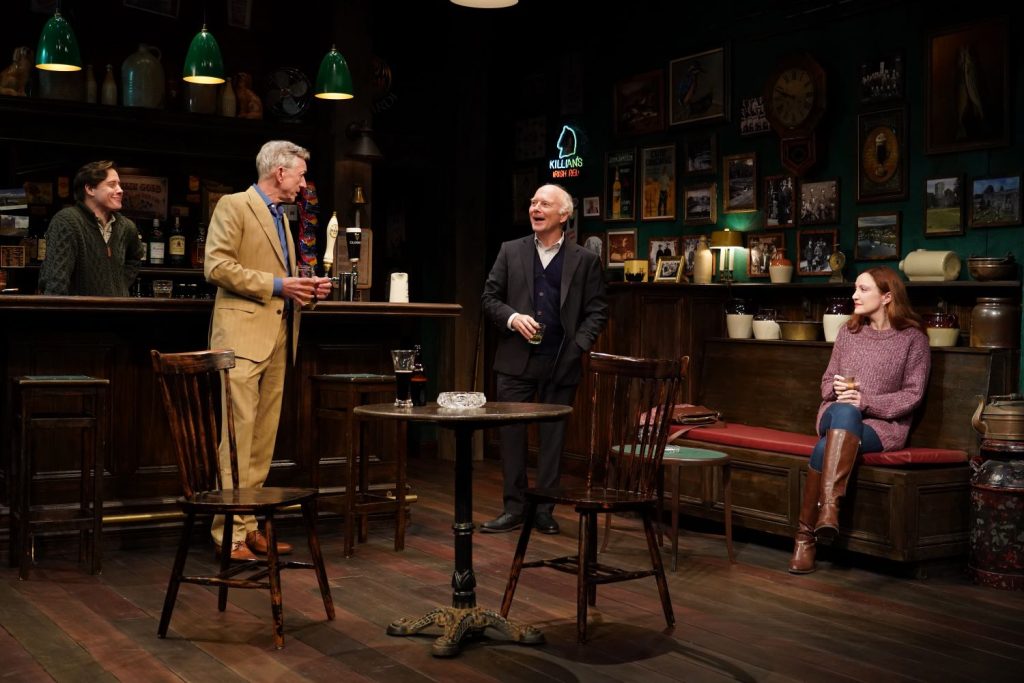
The play is set in a part of northwest Ireland around Leitrim or Sligo in 1998. Five characters drink and exchange ghost stories as they have “a small one,” chasing down their desire for camaraderie. Charlie Corcoran’s scenic design of the pub with wooden bar, snacks, bottles, a Guinness tap, and heating grate suggests a comfortable place for the locals to have a few pints and enjoy themselves.
Michael Gottlieb’s warm, inviting lighting enhances the actors’ storytelling with an intimate atmosphere. The other elements too, including the music (sound design by Drew Levy), heighten O’Reilly’s vision of an outpost of good will, protective of its denizens.
A Dark, Windy Evening
On a dark, windy night Jack, a humorous local, drops in for drinks as a part of his routine after work at his garage. He helps himself to a bottle since he can’t draw a pint of Guinness from a tap that has stopped working. Still, Brendan (Johnny Hopkins), owner of the pub, house, and farm, makes sure the well-stocked bar doesn’t disappoint. So the alcohol flows as Jim (John Keating) joins Jack and Brendan for “a small one.”
Because the “entertainment” for the evening will include businessman Finbar (Sean Gormley) and his female client, the men wait and enjoy teasing conversation with each other. As bachelors, Jack, Jim and Brendan gossip about the married Finbar’s intentions with his female client. Though they say they enjoy their independence, the unmarried men are hiding loneliness. The prospect of a young single woman from Dublin sparks their gossip and consideration.
Folklore and Fairies
As Finbar and Valerie settle in for drinks, the conversation turns to folklore, fairy forts, and spirits of the area. Appearing interested in viewing old pictures from their parents’ time, Valerie encourages the men to share stories that have spooky underpinnings. Knowing a story about the “fairy road,” Jack talks about unseen presences that knock on the windows and doors of the very house that Valerie has purchased from Finbar.
Caught up in his own storytelling, which casts a hush over the listeners (and audience), Jack doesn’t realize the import of his story about the house. A priest sent the spirits packing, but a last burst of supernatural activity happened when workers constructed the weir (dam). Then the knocking returned and locals found hundreds of dead birds in the hedges. Everyone, especially Valerie, accepts the story as a part of life forever unexplained.
Finbar and Jim Add Their Ghostly Tales
Not to be outdone, Finbar shares his own ghost story, which also stirs the listeners’ emotions. Then Jim who tells of a man who had died appearing in a graveyard and expressing a wish. Again, they accept the unexplained mystery.
The storytellers’ belief in haunting spirits rises, but then doubts take over. With Valerie in the bathroom, Finbar chides the men for upsetting her. Jack’s humorous calling out of Finbar as a hypocrite leads them all to apologize to each other. By this point, the joy of their good-natured bantering and the actors’ relaxing, spot-on authenticity has immersed and lulled us.
A Shift in the Atmosphere
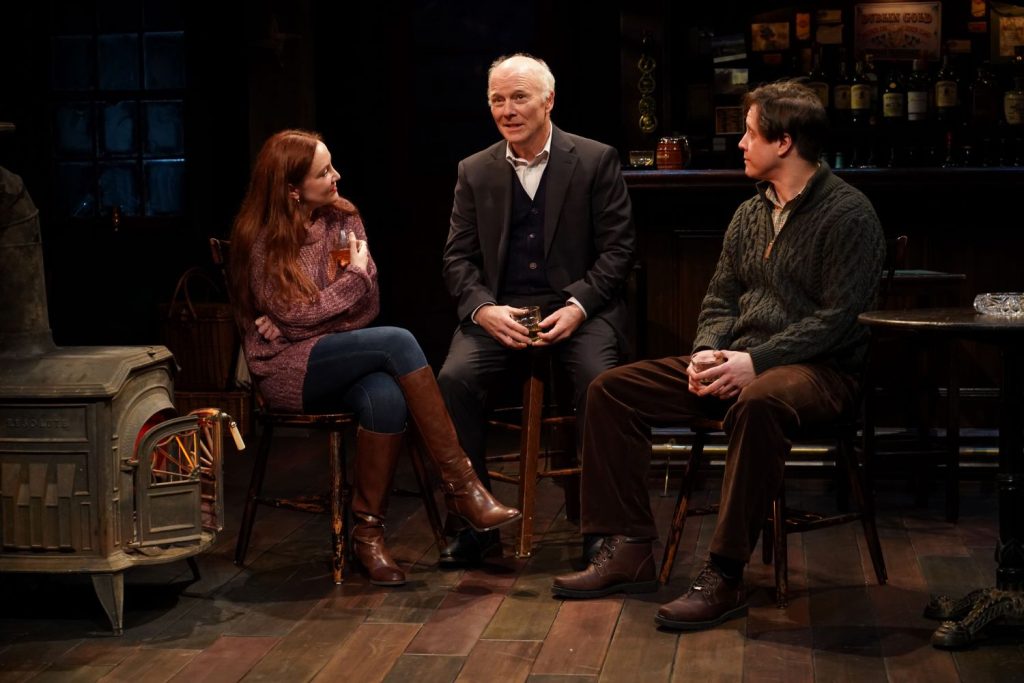
However, it’s not to be. Once more McPherson shifts the atmosphere. As Valerie relates her story of an otherworldly presence, the supernatural becomes entrenched in reality. Unlike the men’s tales, what she shares is heartfelt, personal, and profound. The others express their sorrow at what happened to her. Their attitude toward Valerie changes to one of human feeling and concern. With this human connection, their objectification of the strange young woman vanishes in favor of a new level of feeling and unity.
After Finbar leaves with Jim, there is a surprising coup de grâce. Quietly, Jack shares his poignant, personal story of heartbreak: his own haunting, but by the living. In an intimate emotional release, Jack tells how he loved a woman he would have married but let her slip away. Advising the younger Brendan not to remain alone, Jack says, “There’s not one morning I don’t wake up with her name in the room.”
A Loss
Back when the world was slower, folks sat for hours and talked to each other in community. Thus they could dispel feelings of isolation and hurt. Connecting, they helped redeem each other by confessing their problems, or swapping mysteries with no certain answers.
As digital technology speeds up life’s pace, the ebb and flow stops up, controlled by outside forces. With fewer opportunities to connect, people have retreated into themselves. Redirected by distractions, much as a dam might redirect the flow of a river and destroy a place where magical fairies once bathed, people have lost touch with their spiritual inner selves. As their isolation grows, their sense of humanity and decency fades. It becomes easier to objectify and hate anonymously through a screen. Cultural divisions fracture beneficial communities. And here we are.
McPherson’s magnificent play, in the hands of O’Reilly, the ensemble, and the creative team, is a nod to the “old ways.” It reminds us of the value of gathering in pubs or around fireplaces or heating stoves. As companions warm themselves, they unfreeze their souls, learn of each other, and break through the deep silences of human suffering.
The Weir is at the Irish Repertory Theatre.