 Blogcritics The critical lens on today's culture & entertainment
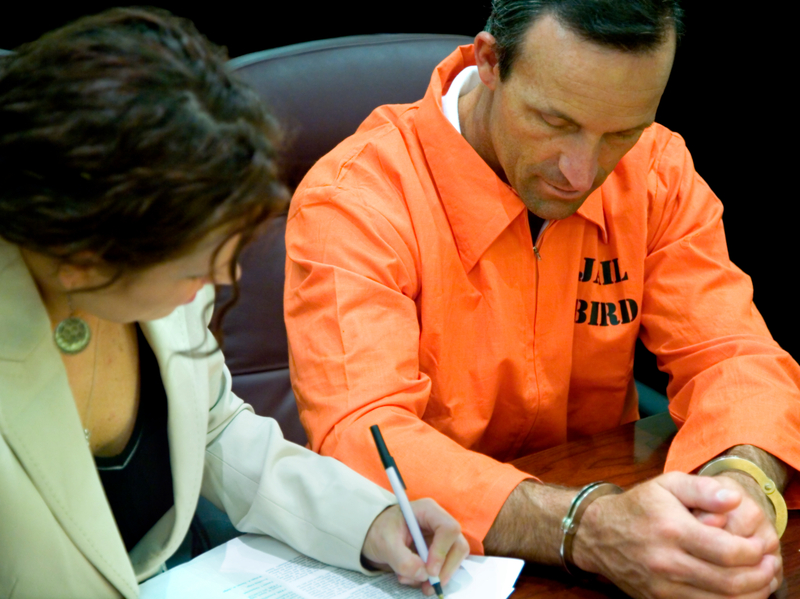
In a recent 5-4 decision, the U.S. Supreme Court resolved a dispute among lower federal courts about how large a share of damage awards won by inmates in civil rights cases must be paid towards their lawyers’ fees. Murphy v. Smith, decided February 21, turned on how to interpret §42 USC 1977(e)(d), a provision in the Prisoner Litigation Reform Act (PLRA), which says that in cases where an inmate is awarded both damages and attorney’s fees, a “portion of the judgment (not to exceed 25 percent) shall be applied to satisfy” the inmate’s legal fees.
In 2011, Charles Murphy, an Illinois state prison inmate, angered two guards who were taking him to a segregation cell. As Murphy’s arms were handcuffed behind his back, one guard hit him in the eye and put him in a chokehold that caused him to black out. The guards pushed the unconscious inmate into the cell face-first, causing him to hit his head on a metal toilet. They then uncuffed him and left him without getting him medical attention. After a nurse eventually discovered him, he was hospitalized for surgery on his partially crushed eye socket; his vision remains impaired.
Murphy sued the guards in federal court, alleging civil rights violations. At trial, a jury found the police had violated Murphy’s civil rights by using excessive force and ignoring his medical needs. The district court judge awarded Murphy $307,733 in compensatory damages, and awarded his lawyer $108,446. The trial judge then decided 10% would be a reasonable portion of Murphy’s damages for him to pay towards satisfying the lawyer’s award, and ordered the inmate to pay his lawyer about $31,000.
But on appeal, a three-judge panel of the Chicago-based 7th Circuit disagreed, reading the PLRA section as requiring an inmate who prevails in such a lawsuit to pay exactly 25% of his award towards the legal fees, not as much as 25%, as the trial judge deemed fit. Under this interpretation, Murphy would have to give his lawyer about $77,000. He appealed to the U.S. Supreme Court, which took the case to address the differing approaches taken by the 7th Circuit and four other federal appellate courts.
Sixteen states filed a “friend of the court” brief urging the Court to uphold the decision that defendants who lose in inmate civil rights lawsuits are required to pay legal fees only after prevailing inmates have first paid a full 25% out of their damage awards. Nine groups, including the American Civil Liberties Union and the National Association of Criminal Defense Lawyers, submitted a brief calling for the appeals court decision to be reversed.
The high court’s conservative majority, in an opinion written by its newest member, Justice Neil Gorsuch, agreed with the Chicago-based appeals court, reading the PLRA language as mandatory, not discretionary, especially absent any standards by which a trial judge might go about figuring what lesser figure might be fitting. Chief Justice Roberts and Justices Alito, Kennedy and Thomas joined the majority decision. A dissenting opinion by Justice Sotomayor, joined by Justices Breyer, Ginsburg, and Kagan, pointed to language in the statute (“portion” and “not to exceed”) which frequently are used by legislative drafters to confer discretion.
Christopher Zoukis is the author of Federal Prison Handbook: The Definitive Guide to Surviving the Federal Bureau of Prisons, (Middle Street Publishing, 2017), and College for Convicts: The Case for Higher Education in American Prisons (McFarland & Co., 2014). He regularly contributes to The Huffington Post, New York Daily News, and Prison Legal News. He can be found online at ChristopherZoukis.com, PrisonEducation.com and Prisonerresource.com.