 Blogcritics The critical lens on today's culture & entertainment

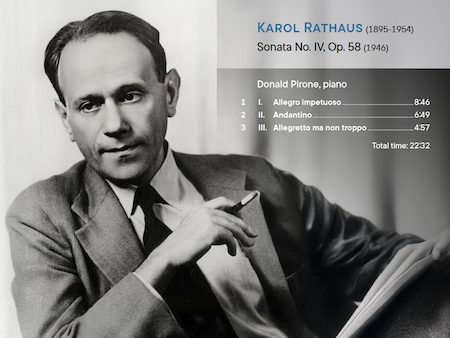
Pianist Donald Pirone continues his long engagement with the music of Karol Rathaus on a new EP featuring the composer’s fourth Piano Sonata, from 1924.
Rathaus was born in 1895 in Tarnopol (Ternopil), then part of the Austro-Hungarian empire and now in western Ukraine. He studied composition with Franz Schreker in Vienna and Berlin. Schreker was most successful as a composer of operas. But Rathaus’ own instrument was the piano, and though he composed in many genres, including American film scores after he emigrated to the U.S., his piano music is some of his most impressive. In it he concentrated many influences from the early modern era, filtered them through a lens from the late Romantic period, and created his own distinct musical language.
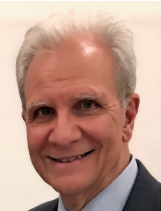
That’s abundantly clear in the Piano Sonata No. IV, which Pirone convincingly renders here in a performance that feels utterly natural and reflects the pianist’s long study of Rathaus’ work, going back to his thesis.
Unpacking the eight-minute-plus “Allegro impetuoso” first movement reveals more elements than one can efficiently describe, though Pirone makes a good try in his liner notes. The music mingles poetic, rubato sections with rhythmic passages and, beginning late in the third minute, the sense of a game, clouded with ambiguous dissonance.
The lyrical section that begins in the fifth minute feels like a quiet exposure into the sunlight of the tangled, sometimes dark emotions that churned earlier. Harp-like upward runs then re-introduce the aggression of the opening.
But the memory of the placid passages reawakens during the first part of the “Andantino” second movement, which opens in a candlelit mood and flirts with sentimentality without going full Romantic.
This initially quiet movement then slowly builds toward a dramatic interlude built on a rhythmic six-note motive that may crawl under your skin if you lean into it. Lyricism dressed in spaciousness and plastic tempos lightens the final section, setting up the childlike initial statement of the final movement’s first theme.

In that closing movement the music rapidly coalesces into alternating sixteenth-note passages and rhythmic triplets. All the while, and throughout the sonata, you can almost feel Pirone’s fingers on the keys. Part of it is his free but modest approach to rubato, which extends to slightly irregular timing of individual notes and arpeggios even in the fast passages. The consistently rich colors he draws from the instrument also contributes to the soulfulness of the performance. The ultimate effect is assured but unfailingly human with no need for exaggeration or splashiness.
I’ll be seeking out more piano music by Rathaus played by Donald Pirone. For now, this fine EP will do. Karol Rathaus, Piano Sonata No. IV, Op. 58 from Donald Pirone is out now on New Focus Recordings and available at Bandcamp.