 Blogcritics The critical lens on today's culture & entertainment
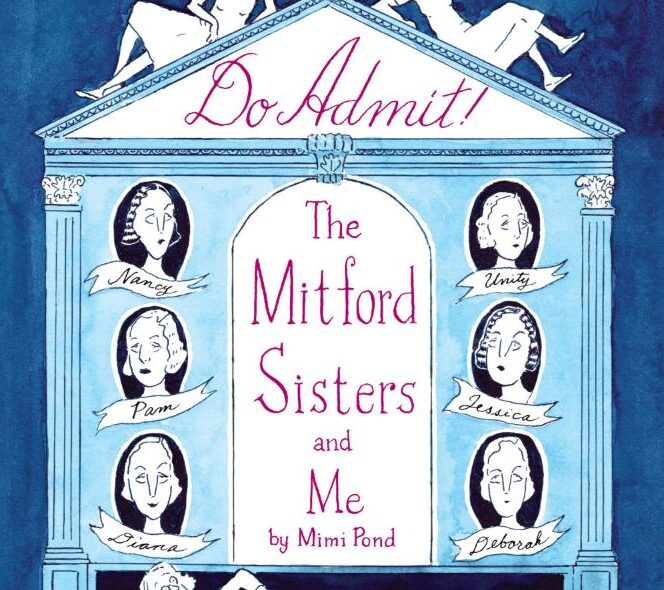
Do Admit
Do Admit: The Mitford Sisters and Me by Mimi Pond and published by Drawn+Quarterly tackles an enormous project, telling not just one biography but seven. Six are the Mitford Sisters themselves. If readers have not heard of them beforehand, they will absolutely know them afterward from all their surprising connections with political leaders, revolutionaries, artists, and more recognizable figures for decades through the 20th century.
The seventh biography is that of Pond herself, sprinkling in a few instances from her teen years as she discovered the Mitford sisters. She shows that her own experience fits perfectly with the themes of fame and social power represented throughout the lives of six sisters who each went their own very different routes in the complicated crossroads of the past century.

Do Admit begins with the young sisters growing up in rural England, educated at home by governesses, playing pranks, speaking made-up languages, and generally being girls, especially when their parents decried them for being unladylike. Though deeply part of the peerage as cousins of Winston Churchill and Bertrand Russell, the family struggled for money.
Their brother, Tom, was of course set to inherit everything in the estate, such as it was, meaning the girls were expected to prepare themselves for the most reasonable thing: marrying upstanding, wealthy men. As modern women, though, there was far more to do.
Biographies are often complicated enough with one lifetime to follow, and Pond expertly weaves together all the numerous strands of the Mitfords’ lives in Do Admit. The oldest, Nancy, made her way by writing comic novels, often based on ridiculous adventures of socialites she knew, including family, and bold historical biographies. Pamela, “the quiet one,” indeed lived quietly in the countryside with her philandering husband until the marriage disintegrated in 1951 and she spent the next two decades with a woman in Switzerland.
Diana fell in love with British fascism, literally marrying Oswald Mosley and spending World War II under house arrest. Unity, too, was passionate for fascism and moved to Berlin as a fangirl of Hitler, shooting herself the day Britain declared war on Germany after the invasion of Poland.
Jessica was politically the opposite, a lifelong communist whose journalistic investigations of the U.S. funerary industry shocked her adoptive country. Deborah was perhaps the most “normal” of the lot, becoming Duchess of Devonshire and working to restore Chatsworth House to the famed tourism site it is today.
While tracing the Mitford sisters’ lives, Pond adds snippets of her own experience learning of the Mitfords in 1960s suburban California. She compares her own mundane life with the glamor and adventure in the biographies and tabloids and shows how enraptured she became with following their lives. These same feelings keep the reader engaged, with wild stories in country homes, castles, Parisian apartments, and war-torn countries with a group of women so different from one another it is fascinating they all came from the same family.
The art in Do Admit mixes caricatures with cartoons mirroring famous photographs, such as Nancy’s boyfriend Gaston Palewski walking alongside Charles de Gaulle near the Eiffel Tower after the liberation of Paris. Creative layouts make the story flow over each page with hand-drawn lettering often integrated into the images themselves in bold headlines or calligrams.
The language itself is an art, as Pond brings in the enthusiastic words of the upper-crust gals, calling their father by his nickname “Farve,” Nancy telling Jessica “Muv’s been in floods” after her elopement to join the war in Spain, and of course telling each other, “Do admit!”