 Blogcritics The critical lens on today's culture & entertainment
Adrian Tomine
Q&A by Adrian Tomine, published by Drawn and Quarterly, answers many of the frequent questions an accomplished cartoonist receives on a regular basis. Tomine, who turned 50 in 2024, has been producing comics since he was a teenager. He began raising glances with his ongoing comic series Optic Nerve, and since has published extensively, with graphic novels like Killing and Dying, covers for The New Yorker, and the annotated screenplay of the film adaptation of his memoir The Loneliness of the Long-Distance Cartoonist. With so much on his resume, the question is, how does he do it? Tomine is happy to answer.
Tomine discusses the importance of feedback in the introduction to Q&A, describing his three decades “working alone, hunched over a desk in the corner of a bedroom.” While the physical act of drawing might be isolating, Tomine views the creative process differently, as a conversation with “an amorphous, mostly anonymous group of people who are for some reason drawn to my work.”
Like classic Marvel comics featuring “Stan’s Soapbox,” Tomine would publish and answer letters in Optic Nerve, keeping that conversation going. The internet has made things much faster now, allowing for near-instant Q&As on Substack, but the content is the same: genuine connection. With that sincerity and self-deprecating humor, reading Q&A feels like having a chat in a coffee shop.
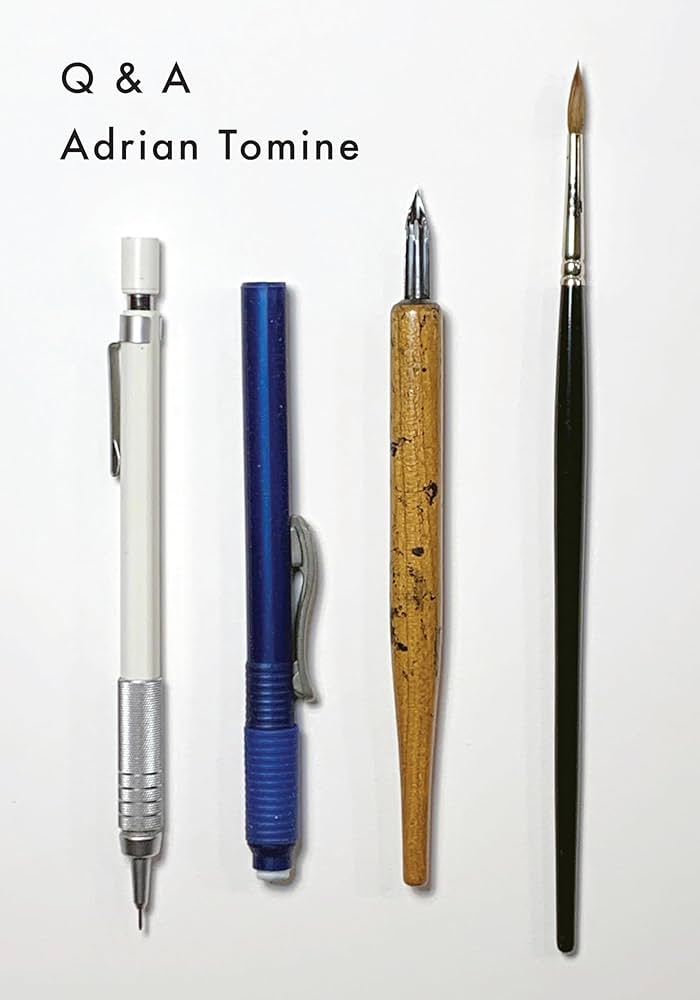
One of the first questions answered in Q&A addresses the often bemoaned question, “What kind of pens do you use for sketches and inking? And also, what kind of paper works best for you?” Like photographers being told “you must have a fancy camera,” artists are too often thought to exercise talents simply with secret, special tools.
Tomine sets the story straight that “there are no ‘right’ tools,” and proceeds to show what works for him. He gives detailed makes and models, and the book even includes photographs to inspire people who might want to use the same. The true lesson is that the artist chooses the tools that suit the project best, whether graph paper in a notebook or prestigious, hard-to-find white paint for touchups.
Q&A is not so much a “how to” as it is a “how I did.” Other creators are eager to emulate Tomine’s successes, and he is encouraging, even if his own path was very different from typical routes. He notes, “I’ve never had a literary agent,” and discusses his old-school practices of mailing copies to publishers and even showing up without an appointment at The New Yorker’s offices to drop off his unsolicited portfolio. From there, Tomine traces his inspirations and describes his methods of designing a New Yorker cover, responding to feedback, and redesigning for a collaborative effort.
That sense of connection and collaboration proves the driving force through Tomine’s Q&A. He notes how he has worked jobs ranging from dishwasher to summer school teacher and never went to art school, instead learning through practice and critique sessions, some informal and some intensive, with Richard Sala and Daniel Clowes. Artists suggested contacts, and contacts brought new artists and editors to work with.
Feedback from all directions is important, though most of his critiques come from his wife and kids out of proximity. It is all about the people in our lives who guide us, and Tomine writes that people should try sending their own art out to artists they admire, along with “a tiny bit of praise.” The suggestion comes with a warning: “If you specifically ask for feedback, be prepared to take some criticism or advice that you maybe weren’t expecting.” It might be hard to hear, but it could also be the most important thing a burgeoning artist hears in their career.