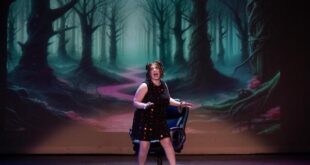
What does an avant-garde cat video have to do with Fascism? The omnibus film Futurist Life Redux, distributed by Microcinema, answers that burning question.
This isn’t the first time Microcinema has brought its viewership the finest in 21st century cat entertainment. But this time the cat comes with a pedigree. Filippo Tommaso Marinetti launched the Futurist movement in 1909 with the publication of a manifesto that dictated his aesthetic concerns: mainly, the past = bad, the young and strong = good. Adherents of Futurism admired violence and Fascism. In 1916, Marinetti , Arnaldo Ginna, and other Futurist-aligned artists made the movement’s only official film, Vita Futurista, which consisted of eleven segments with titles like “How the Futurist Walks,” “How the Futurist Sleeps,” and “The Sentimental Futurist.” But the sole surviving print was lost decades ago, and only stills and a synopsis survive.
The Futurists influenced better known art movements like Dada and Surrealism, but remain fairly obscure today. The non-profit arts organization Performa celebrated the centennial of the birth of Futurism by commissioning eleven artists to recreate “Vita Futurista” for our time. The demographic of the selected artists is primarily female, which seems to fly in the face of the male-centric Futurist ideal. But if the past=bad, then the Futurists should embrace, if hugging is their thing, this more inclusive document, which looks forward and backward at the same time.
If the resulting work seems random, that’s because to a large extent it is. The video and film artists selected were given a challenging assignment: after accepting the commission, they received their instructions: a one sentence description of their randomly assigned segment of the film, along with surviving stills and a four-week deadline. Curated by Lana Wilson with Andrew Lampert, the eleven segments that make up Futurist Life Redux are a mixed bag, but the strongest of them are bursting with the kind of spontaneous inventiveness that you’d hope for from such a project, but seldom achieve.
A segment by the late George Kuchar will be of interest to fans of the legendary underground filmmaker, but the video effects make one long for the black and white film stock of his best known work. Martha Colburn’s "One and One is Life" casts Wonder Woman in a stop-motion paper animation that avoids the cheesy 80s video look of much of the work here for the more subtle look of 16mm film. The super-heroine battles flaming automobiles and civil war soldiers on horseback on a mirrored stage that disorients but also reflects back the vivid imagery in fluid ways that send the action out in all directions.


Article comments